
This process map is for behaviour support practitioners, behaviour support providers and implementing providers. It shows how behaviour support plans and restrictive practices are managed, from developing and lodging a plan to authorisation and monthly reporting.
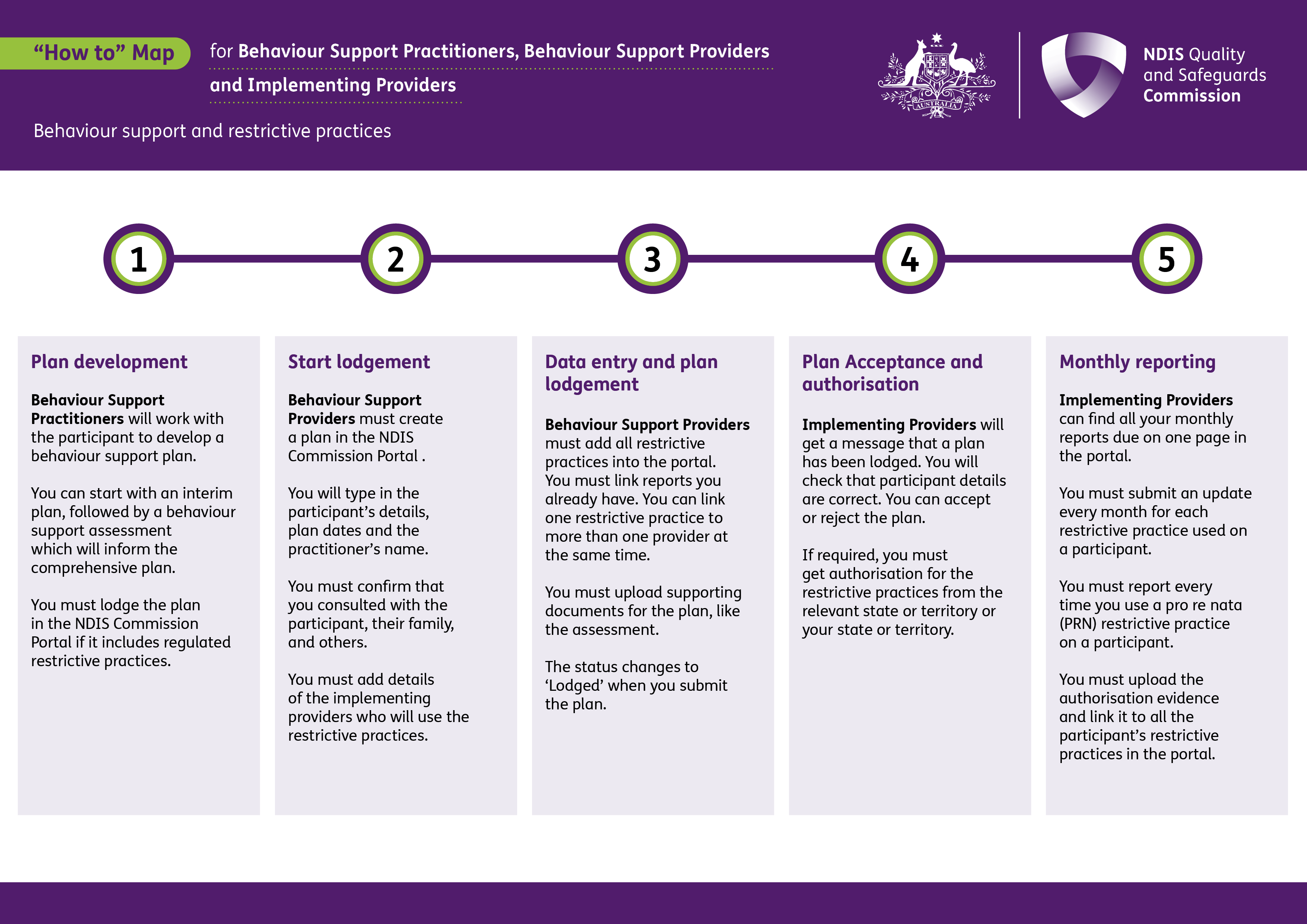 Select to view a larger version of this image.
1. Plan development
Behaviour support practitioners will work with the participant to develop a behaviour support plan.
You can start with an interim plan, followed by a behaviour support assessment which will inform the comprehensive plan.
You must lodge the plan in the NDIS Commission Portal if it includes regulated restrictive practices.
2. Start lodgement
Behaviour support providers must create a plan in the NDIS Commission Portal.
You will type in the participant’s details, plan dates and the practitioner’s name.
You must confirm that you consulted with the participant, their family, and others.
You must add details of the implementing providers who will use the restrictive practices.
3. Data entry and plan lodgement
Behaviour support providers must add all restrictive practices into the portal. You must link reports you already have. You can link one restrictive practice to more than one provider at the same time.
You must upload supporting documents for the plan, like the assessment.
The status changes to ‘Lodged’ when you submit the plan.
4. Plan acceptance and authorisation
Implementing providers will get a message that a plan has been lodged. You will check that participant details are correct. You can accept or reject the plan.
If required, you must get authorisation for the restrictive practices from the relevant state or territory or your state or territory.
5. Monthly reporting
Implementing providers can find all your monthly reports due on one page in the portal.
You must submit an update every month for each restrictive practice used on a participant.
You must report every time you use a pro re nata (PRN) restrictive practice on a participant.
You must upload the authorisation evidence and link it to all the participant’s restrictive practices in the portal.
More information is available in Easy Read: Creating and managing Behaviour Support Plans.