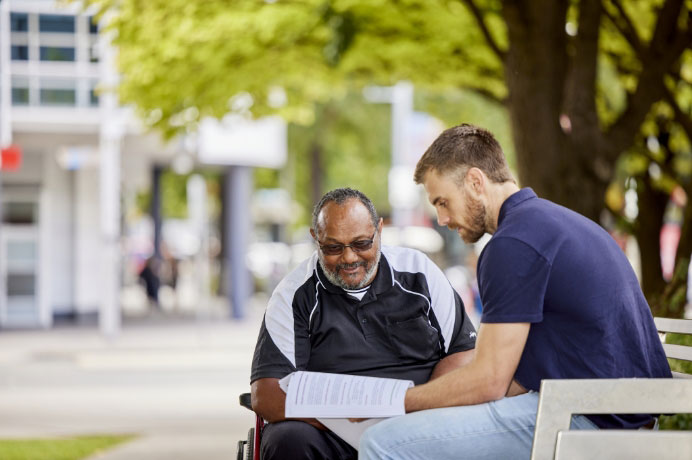
Ronny is a NDIS participant with a spinal cord injury living in Darwin, and identifies as an Aboriginal and Torres Strait Islander person. Ronny has had numerous support workers in the past and now has a small team from 123 Disability Care supporting him with daily activities and personal care.
Ronny’s support worker notified Harpreet, the manager, that Ronny has expressed his interest in participating more in cultural events and a return to country now that his health has improved and he is able to do more things. Harpreet is aware of the importance of connection to culture, country and community for Ronny.
Harpreet take a person-centred approach with the participants he supports and meets with Ronny in person at his supported accommodation. He asks Ronny what types of community and cultural activities he would like to participate in, when he would like to return to country and if he requires any support connecting with his community. Ronny is eager to return to country in the next six months and wants to be involved with the local community in weekly events and activities. He gets on well with his support workers and tells Harpreet that he would like them to support him with accessing the community more.
Ronny’s support team possess competency in the core capabilities set out in the Framework, and he has a diverse team with some Aboriginal and Torres Strait Islander support workers. However, as Ronny has new support workers that have never supported him in a return to country program, Harpreet identified that there are additional capabilities required to deliver culturally safe and appropriate support to Ronny.
Harpreet understands how important it is to work with NDIS participants and their nominated family and community members. He asks Ronny if he is comfortable participating in a team meeting with his support team to ensure that his community engagement supports are individually tailored. Ronny agrees and brings along two community members to the meeting where they design an implementation plan for accessing Ronny’s chosen community activities and return to country in the next four months and highlight the specific cultural elements his support workers will need to understand.
Harpreet has a great relationship with one of the training companies ‘Do it my way’ in Darwin. Harpreet advised ‘Do it my way’ that he would like the staff at 123 Disability Care to do a re-fresher training session to embed culturally appropriate considerations and delivering culturally inclusive supports to Aboriginal and Torres Strait Islander participants. However, the training must be in-line with the ‘Be responsive to my Aboriginal and/or Torres Strait Islander identity’ additional identity capability outlined in the Framework. ’Do it my way’ advised Harpreet, that their training packages are always being refreshed to keep up with sector changes and ‘Do it my way’ is able to meet his requirements for the training.
While some staff are more experienced and identify as Aboriginal and Torres Strait Islander people, he plans to use the training by ‘Do it my way’ to also help support his team in keeping up to date with mainstream and community organisations in the local area that can provide support to participants that 123 Disability Care support who identify as Aboriginal and Torres Strait Islander.